
Fermented Honey
FLAVOUR PACKED DAILY BOOST FOR IMMUNITY, ENERGY AND GUT HEALTH
At Pachamama Regen, we believe healthy soil is the foundation of a healthy life.
Gut health plays a critical role in overall wellbeing, and the quality of the food we consume matters.
We use 100% raw honey, fermented with natural botanicals to create a honey that tastes amazing, is good for your gut and preserves the natural enzymes, trace minerals, and complex flavours.
Perfect for glazing meats, drizzling over cheese boards, vegetables and salads, adding depth to marinades, or lifting everyday meals with a touch of sweetness and spice.
Food as it was intended to be — nourishing, favour-rich, and deeply satisfying.
👉 Download Fermented Honey Guide
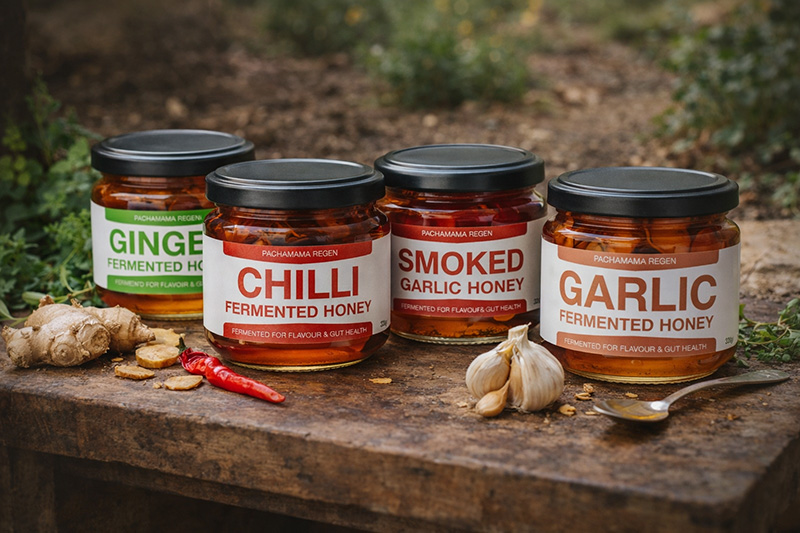
Our small-batch range of fermented and favour honeys inspired by our Regen philosophy. Each jar is crafted to support gut health while elevating flavours for everyday meals using raw local honey and fresh natural ingredients.
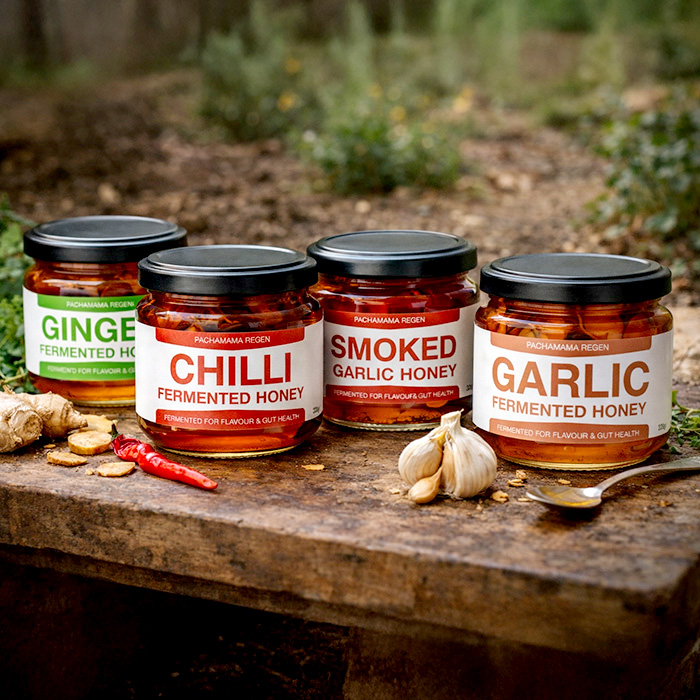
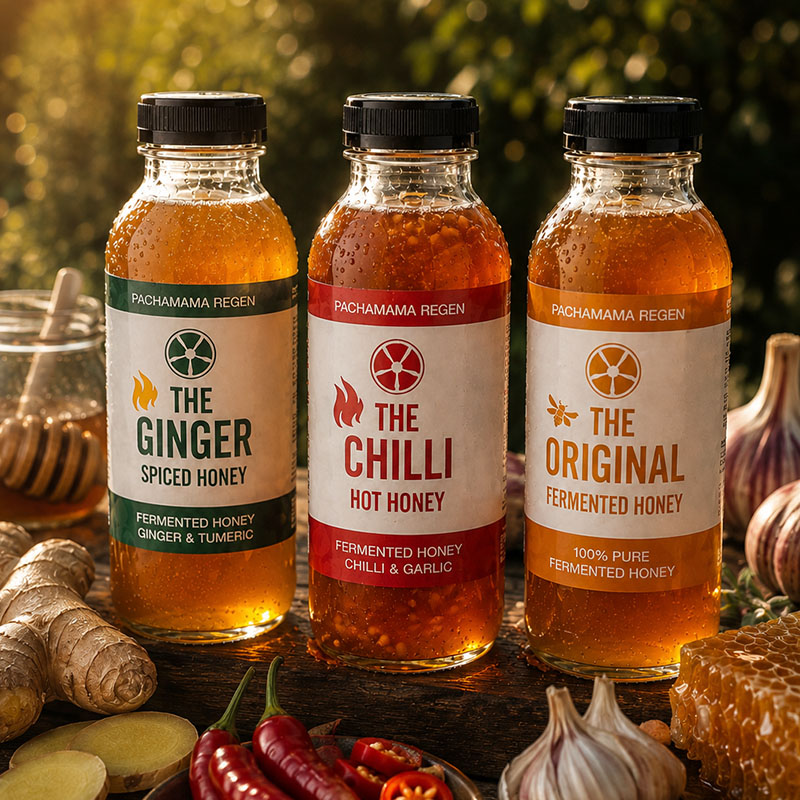
Fermented Chilli Honey
A fusion of sweet heat and probiotic goodness. Adds depth, warmth, and gut-friendly benefits to every dish.100% Australian Raw Honey, Chilli, Garlic & Thyme
Fermented Ginger Honey
A warming daily boost supporting immunity and gut health, with a gentle ginger kick. 100% Australian Raw Honey, Ginger, Tumeric & Thyme
Fermented Garlic Honey
Sweet, tangy, and rich in probiotics. A versatile everyday favourite for savoury cooking & bbq. 100% Australian Raw Honey, Garlic & Thyme
Smoked Garlic Honey
A fusion of sweet heat and probiotic goodness. Adds depth, warmth, and gut-friendly benefits to every dish. 100% Australian Raw Honey, Smoked Garlic & Thyme
Pure 100% Australian Raw Honey
Pure, local honey with natural enzymes, trace minerals, and complex flavours. 100% Australian Raw Honey
👉 Download Fermented Honey Guide
“Through natural fermentation, honey becomes easier to digest, richer in beneficial compounds, develops more complex flavours and becomes more supportive of gut ecology.”