








Can Organic Soil Amendments Grow Healthier Gut Produce?
Last Updated: November 21, 2026
Quick Summary
Organic soil amendments improve soil structure, organic matter, microbial activity and water retention, feeding the soil food web before your crops. Compost is the backbone, while charged biochar adds water retention and microbial habitat. The soil health to gut health link is real but indirect, running through fibre and polyphenol content in produce.
- Spread a 2-5 cm layer of mature compost each season and fork it into the top 10-15 cm.
- Charge fresh biochar with compost or liquid feed for a week or two before applying it.
- Compost manure thoroughly and never apply raw manure to growing leafy crops.
- Get organic matter above 3% and water retention, nutrient cycling and structure improve together.
- Let your soil test set amendment rates, since excess phosphorus can lock up trace minerals.
Table of Contents
- What Organic Soil Amendments Actually Do for Your Veggie Beds
- Compost for Healthy Soil: The Foundation of Nutrient-Dense Produce
- Biochar for Garden Soil: Water Retention, Carbon and Microbial Habitat
- The Soil Health and Gut Health Connection: What the Evidence Shows
- Safe Use of Organic Soil Amendments on Edible Crops
- Choosing Amendments Based on Soil Tests and Crop Needs
- Building a Gut-Health Garden Plan with Pachamama Regen
- Frequently Asked Questions
What Organic Soil Amendments Actually Do for Your Veggie Beds
Organic soil amendments are materials added to soil to improve its physical, chemical and biological condition, and they are the foundation of any gut-health garden. Unlike synthetic fertilisers that feed plants directly, organic soil amendments feed the soil food web first. The soil then feeds your crops.
That distinction matters more than most gardeners realise. Healthy soil holds water, cycles nutrients and supports the soil microorganisms that make nutrients available to plant roots. Get the soil right, and your vegetables tend to be more resilient, more nutrient-dense and better able to support your own gut health.
Here is what good organic soil amendments actually deliver:
- Better soil structure: crumbly soil that roots can push through
- More organic matter: the raw material for humus and long-term fertility
- Stronger microbial activity: a living soil microbiome that cycles nutrients
- Improved water retention and drainage: both, at the same time
- Steadier nutrient availability: nitrogen, phosphorus and trace minerals released over time
A common mistake is dumping on a single amendment and expecting a miracle. Soil health comes from diversity, not from one bag of anything.
Compost for Healthy Soil: The Foundation of Nutrient-Dense Produce
Compost is the backbone of compost for healthy soil, and no other amendment does as much for soil physical properties. Well-made compost adds stable organic matter, feeds soil microorganisms and improves both water retention and drainage in a single application.
Maturity is the detail most guides skip. Immature compost can tie up nitrogen and burn young seedlings. Mature compost smells earthy, crumbles in your hand and has no recognisable food scraps left in it.
A common way to use it in a veggie bed:
- Spread a 2-5 cm layer over the bed surface each season
- Fork it into the top 10-15 cm rather than digging deep
- Mulch on top to protect the soil surface
- Repeat every season, because organic matter is always being broken down
Compost also supports water-stable aggregates, the small clumps that give soil its structure. That structure is what lets roots breathe while holding moisture for dry spells.
Biochar for Garden Soil: Water Retention, Carbon and Microbial Habitat
Biochar for garden soil is a carbon-rich material made by heating organic matter in low-oxygen conditions. Its porous structure can hold water and nutrients, and it gives soil microbes somewhere to live.
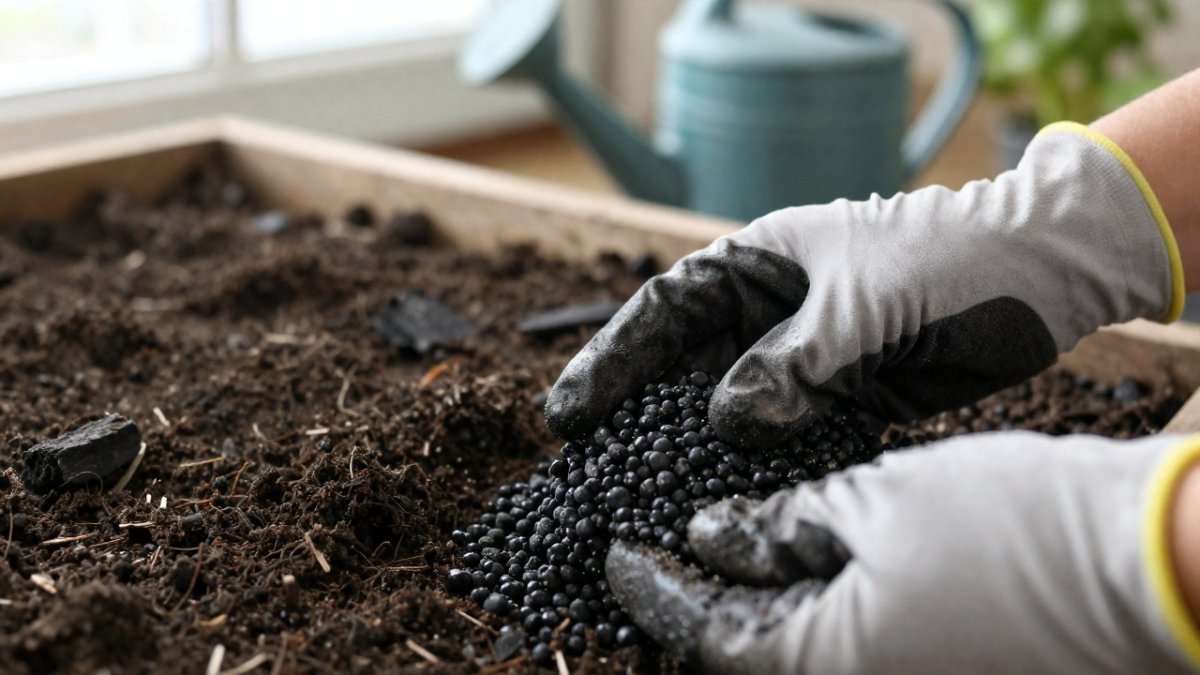
A word of caution. Fresh biochar is not a fertiliser. It has an alkaline pH and can initially adsorb nutrients rather than release them. Charge it before use by mixing it with compost or a liquid feed, and let it sit for a week or two.
In practice, biochar is a long-game amendment. It does not break down the way compost does, so a single application keeps working for years. Blend it through the root zone at modest rates rather than dumping it in one spot, and always pair it with compost so the microbial habitat comes with residents.
Watch out: applying raw, uncharged biochar straight to a bed can temporarily reduce nutrient availability. Charge it first.
The Soil Health and Gut Health Connection: What the Evidence Shows
The soil health and gut health connection is real but indirect, and most guides either overstate it or skip it entirely. Here is the honest chain, step by step, with the mechanisms named.
Step 1: Soil biology changes what plants can take up. Mycorrhizal fungi extend the effective root surface area of most vegetables, improving phosphorus uptake and water access. Free-living bacteria and fungi mineralise organic nitrogen into plant-available forms. A biologically active soil does not just feed plants, it changes the mineral and phytochemical profile of what they produce.
Step 2: Produce composition shifts with soil management. What matters for gut health is not a single nutrient but the combination: fibre, resistant starch, polyphenols and the mineral cofactors your gut bacteria and gut lining use.
None of this requires a specific amendment; it requires eating a wide range of fibre-rich produce grown in genuinely healthy soil.
Step 4: Soil exposure itself contributes.
What the evidence does not show is a clean line from "I added compost" to "my gut is healthier." The links run through several steps, and each step has variables you do not fully control. That is why we talk about gut-health produce rather than gut-health soil. The strongest levers you control are:
- Grow a wide variety of fibre-rich crops, beans, peas, brassicas, leafy greens, root vegetables, alliums
- Build genuinely healthy soil so those crops take up minerals and express their full phytochemical potential
- Eat them fresh and minimally processed so fibre and polyphenols survive to your gut
- Keep soil biology diverse through compost, mulch and minimal disturbance
Anything beyond that is a reasonable hope, not a proven promise. The practical takeaway: amendment choices shape soil biology, soil biology shapes crop composition, and crop composition, especially fibre and polyphenol content, is what your gut actually responds to.
Safe Use of Organic Soil Amendments on Edible Crops
Safe use of organic soil amendments on edible crops comes down to three things: source, maturity and timing. Manure and animal materials carry pathogen risk if they are fresh, so they belong in the compost pile, not straight onto a bed you will harvest from soon.
Common working rules:
- Compost manure thoroughly before it touches edible beds
- Apply raw manure well before harvest, never to growing leafy crops
- Keep fresh organic material away from roots and let it break down first
- Wash all produce and keep soil splash off leaves where you can
- Source from suppliers who can tell you what went in and how it was matured
Amendment quality matters for safety, since poorly matured compost can create food safety risks.
Choosing Amendments Based on Soil Tests and Crop Needs
Choosing amendments from a soil test beats guessing every time, and it is the step most home gardeners skip. A basic soil test, available through many commercial labs, can show pH, organic matter and nutrient levels, helping you match amendments to what you intend to grow.
Reading your results
| Soil Test Result | Amendment to Add | Typical Rate | Timing |
|---|---|---|---|
| Organic matter below 3% | Mature compost, aged manure | 5-10 cm layer | Autumn, before planting |
| Organic matter 3-5% | Compost maintenance | 2-5 cm layer | Each season |
| Low water retention, sandy | Compost plus charged biochar | 5-10% biochar by volume in root zone | Once, then compost annually |
| Low nitrogen | Compost, legume cover crops | 5 cm compost; sow cover crop in off-season | Before heavy-feeding crops |
| Acidic pH (below 6.0) | Mature compost, small amounts of wood ash | Ash at 100-200 g per square metre, max | Autumn, incorporate well |
| Alkaline pH (above 7.5) | Elemental sulphur, acidic compost | Follow label; sulphur is slow-acting | 3-6 months before planting |
| Compacted, poor structure | Compost, plant-based mulch, cover crops | 5-10 cm compost; mulch 5-7 cm | Autumn and ongoing |
These are starting points, not prescriptions. Most practitioners find that organic matter is the first lever to pull: get it above 3% and many other problems, water retention, nutrient cycling, structure, improve together.
Matching amendments to crop needs
Different crops want different things from the same bed:
- Leafy greens and brassicas want steady nitrogen and consistent moisture. Mature compost at 5 cm before planting, plus a mulch layer, keeps nitrogen available without flushes.
- Legumes fix their own nitrogen and do not need nitrogen-rich amendments. They benefit most from phosphorus and potassium availability, which compost and charged biochar support.
- Root crops want loose, well-structured soil free of fresh manure, which can cause forking and carry pathogen risk. Compost incorporated into the top 15 cm is ideal.
- Fruiting crops such as tomatoes and capsicums want calcium and consistent moisture to avoid blossom-end rot. Compost plus mulch, not fresh manure.
- Fibre-rich crops, beans, peas, brassicas, leafy greens, reward a bed with strong organic matter and active biology, because that is what supports the mineral and phytochemical content you are growing for.
Application timing across the season
A simple schedule that works for most home vegetable beds:
- Autumn: soil test, then apply compost and any pH correction. Let it settle over winter.
- Late winter: sow legume cover crops in empty beds to fix nitrogen and build structure.
- Spring: incorporate cover crop residue, top with 2-5 cm compost, mulch after planting.
- Mid-season: side-dress heavy feeders with compost; avoid disturbing roots.
- Post-harvest: mulch to protect soil surface and keep biology active through summer.
Watch out: over-application is a real risk. Excess phosphorus from repeated manure or compost application accumulates in soil and can lock up trace minerals, so let your soil test, not habit, set the rate. If your organic matter is already above 5%, maintain rather than build.
Building a Gut-Health Garden Plan with Pachamama Regen
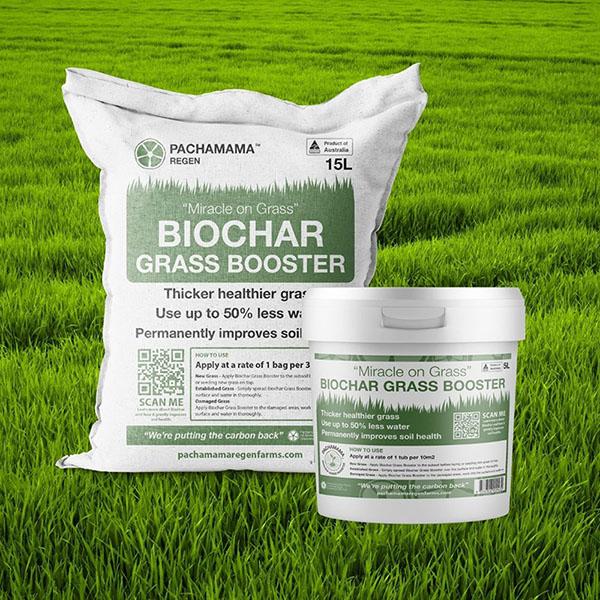
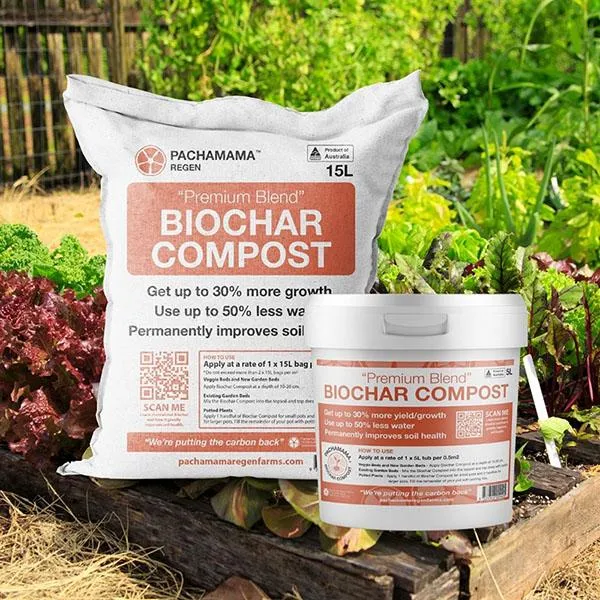
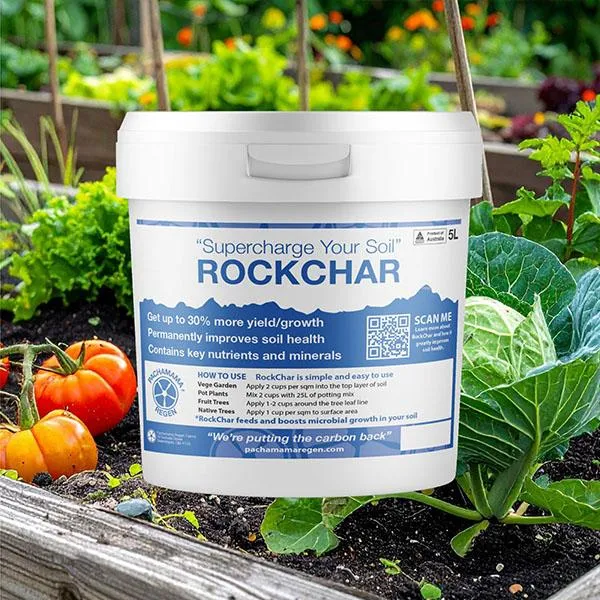
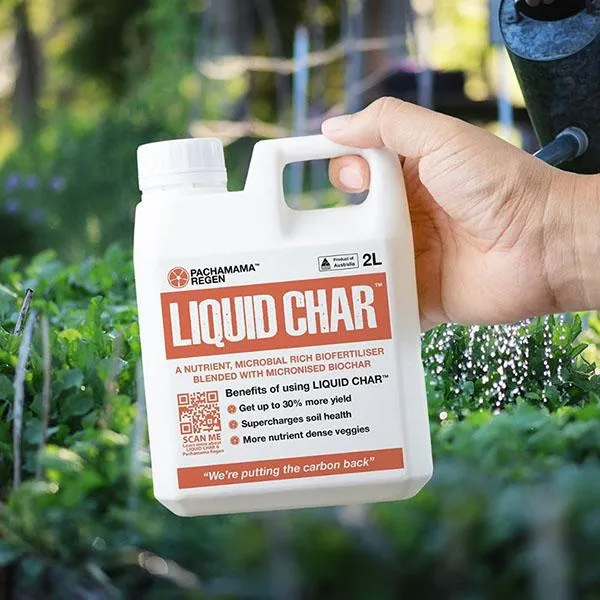
A gut-health garden plan starts with soil, and that is exactly where our products sit. Browse Pachamama Regen honey packs, Wing Dippa, gut tonics and garden products to compare current options and see what fits your beds.
Biochar-based soil amendments can combine biochar with compost and bio-fertilisers, designed to support soil carbon, biology, minerals and water balance. That matters because the amendments in this guide work best as a system: compost feeds the biology, biochar gives it a home, and healthy crops give you the fibre-rich produce your gut wants.
Start with a soil test, add mature compost, charge your biochar before it goes in, and keep animal materials well away from harvest.
Healthy soil is a long game, and the gardeners who win it are the ones who build biology rather than chase quick fixes. Pachamama Regen offers biochar-based soil amendments and raw honey fermented with natural botanicals. Start with your soil test, then get started with Pachamama Regen and build a veggie bed that feeds both your plants and you.
Frequently Asked Questions
What are the best organic amendments for garden soil?
Compost is the foundation, supplying organic matter, nutrients and microbial life. Biochar adds stable carbon and improves water retention in sandy soils. Aged manure and plant-based mulches round out a balanced program. The best mix depends on your soil test: sandy soils benefit most from compost and biochar, while clay soils need compost and gypsum.
Can biochar improve soil structure and water retention?
Yes. Biochar's porous structure holds water and nutrients, and it creates habitat for soil microorganisms. Biochar's porous structure can help hold water and nutrients in the soil. It works best when charged with compost or liquid fertiliser before application, because fresh biochar can initially tie up nutrients.
How can I tell whether an organic soil amendment is safe to use?
Check for compost maturity: mature compost smells earthy, not sour or ammonia-like, and has cooled after heating. Avoid raw manure on edible crops within 90 days of harvest, and use only aged or composted manure. Source from suppliers who test for contaminants. For biochar, choose products made from clean feedstock. The safe use of organic soil amendments comes down to maturity, source transparency and correct timing before planting.
Do organic soil amendments affect the gut microbiome?
Indirectly, yes. The soil health and gut health connection runs through crop quality, not through eating soil. There is no strong evidence that soil microbes colonise your gut from vegetables. The practical takeaway: build soil biology with organic soil amendments, grow diverse fibre-rich crops, and eat them fresh for the biggest gut-health benefit.