








How to Tell If Your Garden Soil Needs Biochar
Quick Summary
Garden soil biochar is worth considering when soil drains too fast, dries out within a day, or lets plant roots dry out between waterings, especially in sandy soil. Confirm the cause first with a squeeze test and a finger test 10 cm deep, since compaction and waterlogging need different fixes.
- Water that disappears within seconds of watering points to sandy soil with low organic matter.
- Puddling on the surface points to compaction, which biochar alone will not fix.
- A squeeze test that makes damp soil fall apart suggests sand, a good trial case for biochar.
- Charge biochar for 3 to 7 days in compost tea or diluted compost before mixing it in.
- Start at 5 to 10 per cent biochar by volume and treat the first season as a trial.
Table of Contents
- Symptoms That Suggest Your Soil Could Benefit From Biochar
- Biochar for Sandy Soil: Spotting the Drying-Out Pattern
- Biochar for Clay Soil: Spotting Compaction and Poor Drainage
- Simple Soil Tests to Run Before You Add Anything
- When Biochar Won't Fix the Problem and What to Do Instead
- How to Charge Biochar and How Much to Use in Your Garden
- Frequently Asked Questions
Symptoms That Suggest Your Soil Could Benefit From Biochar
Garden soil biochar is worth considering when the soil struggles to hold water or support healthy roots, and the warning signs are usually clear.
Last Updated: November 22, 2026
Most gardeners notice a problem long before they know its cause. These signs are easy to check with your own eyes and hands, and each can point to a specific cause you can confirm before spending money.
The diagnostic checklist: match the symptom to the cause
Work through this list before you buy anything. For each symptom, the middle column is what it usually means, and the right-hand column is whether biochar is likely to help.
- Water disappears within seconds of watering. Cause: large pore spaces and low organic matter, typical of sandy soil. Biochar can help, as its porous structure can hold water near the root zone.
- Water sits in puddles on top before soaking in. Cause: compacted or dense soil with few continuous pores, typical of clay. Biochar may help over time, but only alongside compost and aeration; on its own it will not fix compaction.
- Soil dries to a pale, crusty surface within a day. Cause: low organic matter and poor aggregate stability. Biochar likely helps as part of a compost-and-mulch program.
The two extremes that point in opposite directions
Fast drainage and surface pooling are not the same problem, even though both look like 'bad water behaviour'. Fast drainage means little organic matter to slow water down and few small pores to hold it. Surface pooling means the soil is compacted or dense and cannot absorb water at all. Biochar addresses the first well and the second only indirectly, which is why the diagnosis matters more than the symptom.
A quick verification before you commit
Before buying a bag, confirm the cause with two checks. First, the squeeze test: squeeze a handful of damp soil, if it falls apart, you likely have sand or low organic matter, and biochar is a reasonable trial; if it holds its shape and feels sticky, you have clay and should fix structure with compost first. Second, the moisture check: push a finger 10 cm into the soil the day after watering.
Watch out: a single symptom is not a diagnosis. If your soil is waterlogged all year, or plants are yellowing in soil that stays moist, biochar is probably not the fix, see the section below on when biochar won't solve the problem.
Biochar for Sandy Soil: Spotting the Drying-Out Pattern
Sandy soil is the most common reason gardeners consider garden soil biochar. Sand has large particles and big gaps between them, so water and nutrients move through quickly.
Sandy soil usually shows:
- Fast drying after rain or watering
- Light colour and a gritty feel between the fingers
- Nutrients leaching out after heavy rain
Biochar can add tiny pores that hold water near the roots. Results vary with soil type, quantity used and how it is charged, so treat any improvement as a trial rather than a guarantee.
Biochar for Clay Soil: Spotting Compaction and Poor Drainage
Clay soil is the opposite problem. Its fine particles pack tightly, leaving little room for air and water.
Look for these signs in clay soil:
- Water sits on the surface for a long time
- The soil cracks deeply as it dries
- It turns hard and sticky when wet and rock-hard when dry
Biochar can help loosen clay over time by improving aeration. It works best alongside compost and other organic matter, which together build a crumbly, well-drained structure.
Simple Soil Tests to Run Before You Add Anything
Before buying biochar, run a few quick checks. They take minutes and help you avoid wasting money on the wrong fix.
- The jar test: Fill a clear jar with soil and water, shake it well and let it settle for 24 hours. Layers show sand, silt and clay.
- The squeeze test: Squeeze a handful of damp soil. Sandy soil falls apart. Clay soil holds its shape and feels sticky.
- The drainage test: Dig a hole about 30 cm deep, fill it with water and time how long it takes to drain. Several hours suggests poor drainage.
Write down what you find. Retest after a few months to see whether your changes made a difference.
When Biochar Won't Fix the Problem and What to Do Instead
Biochar is not a cure for every garden problem. Some issues need a different fix, and adding biochar to the wrong soil can waste time and money. The decision rules below are the ones most gardeners wish they had before they started.
Four situations where another fix comes first
- Your soil is waterlogged all year. Standing water means the water table or a compacted layer is the problem, not water retention. Fix drainage, build raised beds or add coarse organic matter first. Biochar will not drain a bog.
- Plants show yellow leaves while soil moisture is healthy. This usually points to a nutrient deficiency or a pH problem rather than a water problem. A soil test will tell you which nutrient is missing and whether pH is locking it up. Adding biochar before you know the cause can make the deficiency worse if the biochar is uncharged.
- Your soil pH is far from the range your plants need. Biochar is often alkaline, so it can push pH up. If your soil is already alkaline, or you are growing acid-loving plants such as blueberries, camellias or azaleas, biochar may move pH in the wrong direction. Lime or sulphur is a more direct fix for pH.
When not to use biochar at all
- Alkaline soils. If a pH test reads above about 7.5, biochar is likely to raise pH further. Test first, and choose a lower-rate, well-charged product only if you have a specific reason.
- Sensitive or acid-loving plants. Blueberries, rhododendrons, azaleas and some native species are poor candidates for alkaline biochar.
- Fresh, uncharged biochar. Raw biochar can tie up nutrients and nitrogen in particular when first added. Charge it before use, or expect a short-term dip in plant performance.
How to avoid overapplication
A common mistake is applying too much biochar at once. Heavy use can tie up nutrients and raise pH beyond what plants tolerate. Start at the lower end of the recommended rate, around 5 per cent by volume in the planting area, and treat the first season as a trial. Watch for pale leaves, slow growth or a pH shift, and adjust before adding more.
What to do instead, by problem
- Compaction: aerate, add compost, grow deep-rooted green manures, and avoid working the soil when wet.
- Poor drainage: raised beds, subsurface drainage or coarse organic matter.
- Nutrient deficiency: a soil test, then the specific nutrient, not a general amendment.
Watch out: if you are unsure which problem you have, run the jar test and drainage test above before buying biochar. A wrong diagnosis costs more than a delayed purchase.
How to Charge Biochar and How Much to Use in Your Garden
Raw biochar can absorb nutrients from the soil when first added, which may leave plants short for a while.
Here is a simple approach:
- Soak biochar in compost tea or diluted compost for 3 to 7 days.
- Drain off the excess liquid.
- Mix the charged biochar into the top 15 to 20 cm of soil.
- Water well and let the bed settle.
For how much to use, a general starting point is 5 to 10 per cent biochar by volume in the planting area. Start at the lower end for your first season. Adjust based on how your soil drains and how your plants grow.
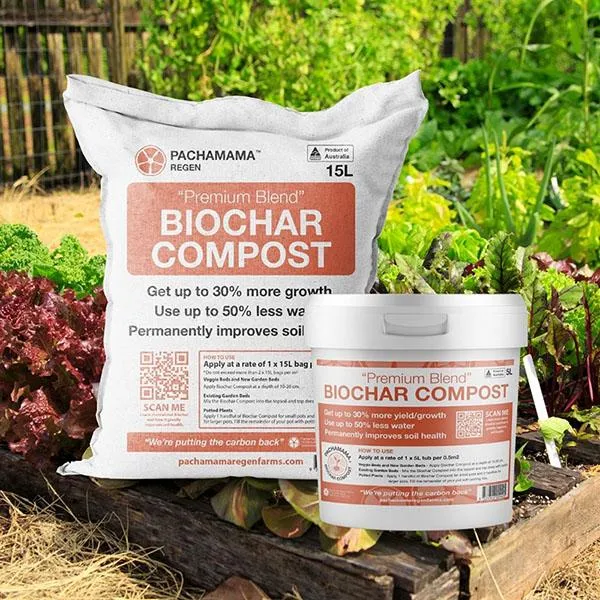
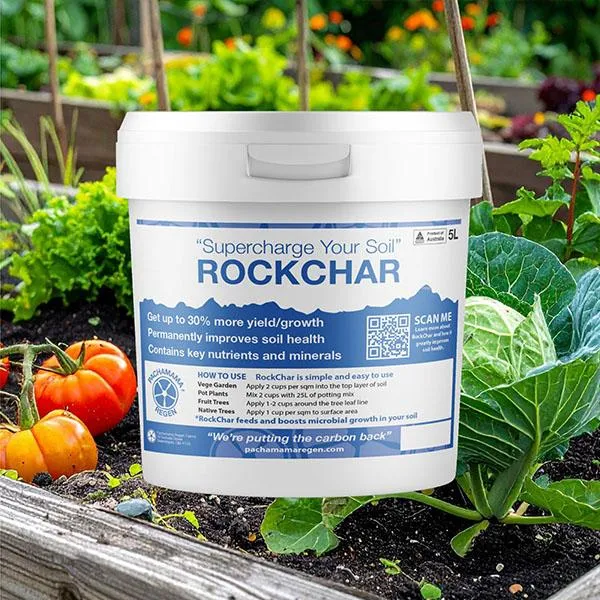
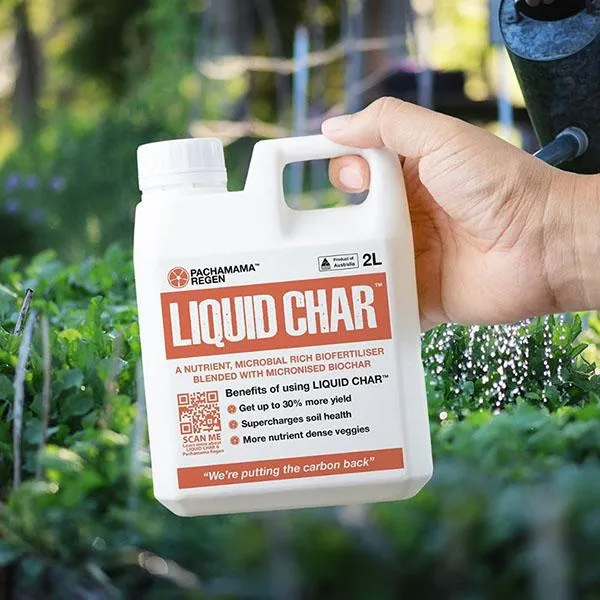
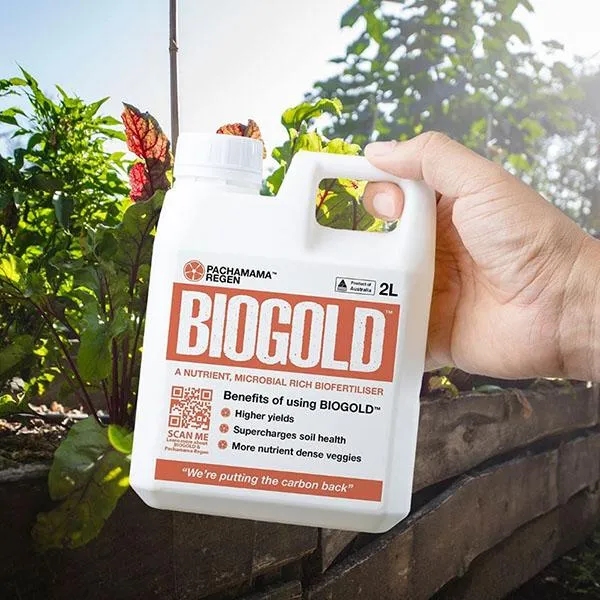
If you are looking to buy biochar, Pachamama Regen offers biochar-based soil amendments designed to combine with compost and bio-fertilisers. You can browse Pachamama Regen garden products to compare options and see detailed product information.
Biochar can be a useful tool for sandy and some clay soils, but it works best when the diagnosis is right. Test your soil, watch your plants, and make small changes you can measure.
The article gives a simple charging method and a starting rate for biochar in garden beds.
| Step | What to do | Time or rate |
|---|---|---|
| Charge | Soak biochar in compost tea or diluted compost | 3 to 7 days |
| Drain | Drain off the excess liquid | Before mixing |
| Mix in | Work charged biochar into the top soil layer | Top 15 to 20 cm |
| Water | Water well and let the bed settle | After mixing |
| Starting rate | Biochar by volume in the planting area | 5 to 10 per cent |
Frequently Asked Questions
What are the signs that garden soil may benefit from biochar?
The most common signs are soil that dries out within a day or two of watering, water that pools or runs off instead of soaking in, hard surface crusting, and plants that wilt despite regular watering. Biochar is most likely to help where these symptoms come from poor water holding or structure. Before buying, dig a small test hole, check how quickly water soaks in, and rule out causes such as overwatering, root disease or nutrient deficiency, since biochar will not fix those.
Can biochar improve sandy soil that dries out quickly?
Yes, biochar is one of the more useful amendments for sandy soil. Its porous structure holds water within the root zone, which slows drainage through the bed. Results are usually gradual, so expect improvement over a season or more rather than overnight. Mixing biochar with compost helps it hold nutrients as well as water, and a moisture check a few days after watering will show whether the bed is holding water better than before.
Does biochar help clay soil with drainage and compaction?
Biochar can help clay soil by adding air pockets and improving crumb structure, which can ease compaction and make the soil easier to work. It will not turn heavy clay into free-draining soil on its own. For clay beds, combine biochar with organic matter such as compost and avoid working the soil when it is wet. Watch whether water drains more evenly over the following weeks as a practical sign of progress.
How much biochar should I add to a garden bed?
Many gardeners start with a modest layer mixed into the top 10 to 15 centimetres of soil, rather than a heavy dose. A common approach is to blend it with compost at a ratio that keeps biochar a minority of the mix, then reassess after a season. Overapplication can tie up nutrients and shift soil pH, so start small and observe. Pricing and bag sizes vary, so check Pachamama Regen's website for current prices or a quote before buying.